Exposed Aggregate Sealing on the Sunshine Coast
Clean it properly, then seal it. Clear or colour-enhancing sealer for exposed aggregate driveways, paths and entries, with anti-slip options where grip matters.
Why Exposed Aggregate Needs Sealing
Exposed aggregate is concrete with the top layer of cement removed so the stones show through. It looks great, but the cement between the stones is porous, and the surface has a lot of texture for dirt to settle into.
Left unsealed, it absorbs moisture, oil and tyre marks, and moss and algae take hold in the gaps. On the Sunshine Coast, humidity and strong UV add to the wear.
A quality sealer helps keep out water, oil and grime, and protects the surface from UV, so stains sit on top instead of soaking in. Day-to-day marks are easier to wash off and the next clean is easier.
We generally use Dulux Avista sealer, and other quality brands where a job calls for it. The right option for your surface depends on its colour, sun exposure and how it's used, and we talk that through when we quote.
Clear or Colour-Enhancing
Clear sealing protects the surface without changing how it looks. It's the usual choice when you like your aggregate as it is and want it protected.
Colour-enhancing sealing deepens and enriches the colour of the stone, bringing faded aggregate back to life, so the surface looks richer, not only protected.
Anti-slip additive can be mixed through the sealer for sloping driveways, entries and paths near pools, where grip matters more than finish. We check the slope first. A gloss sealer can add slip risk when wet, so it's worth asking about.
Not sure which suits your driveway? Send us a photo and we'll talk you through it.
Exposed Aggregate We've Worked On
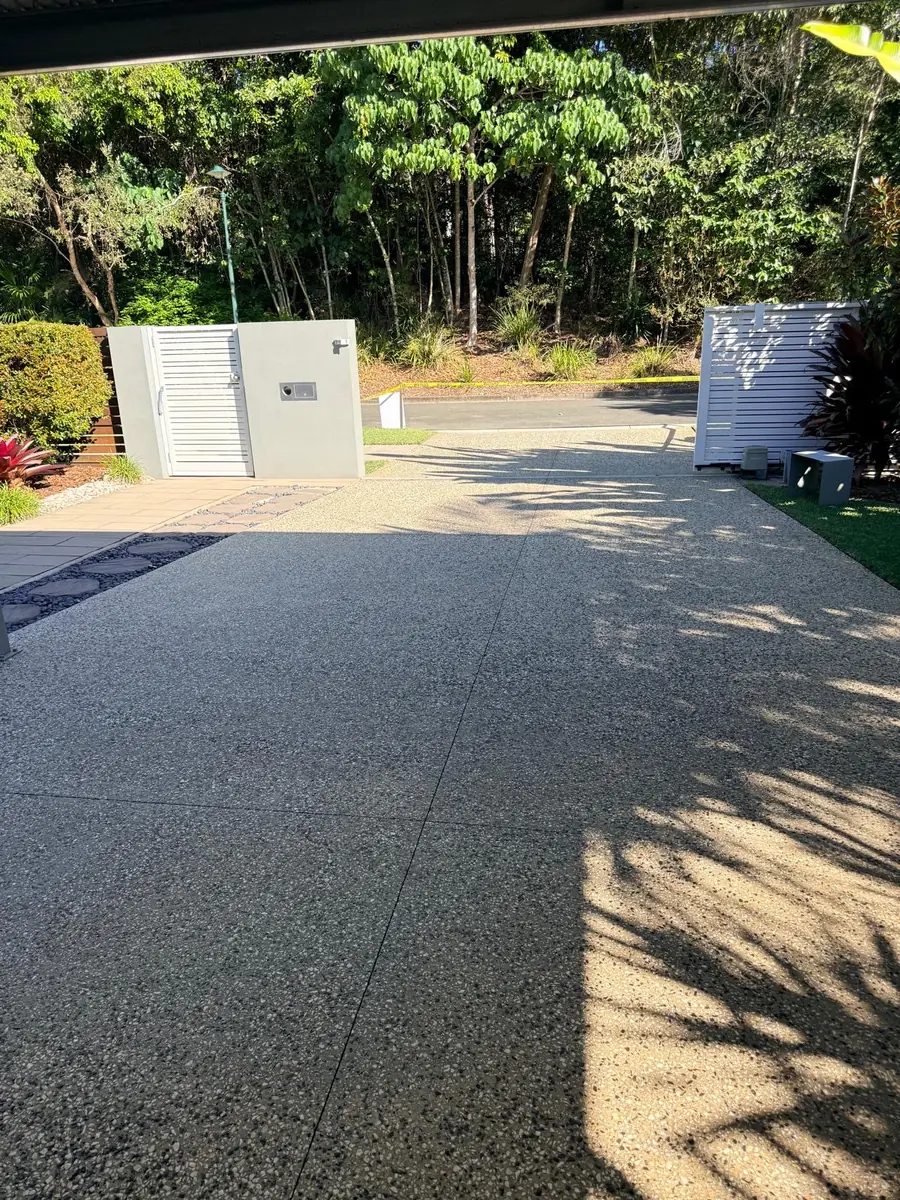
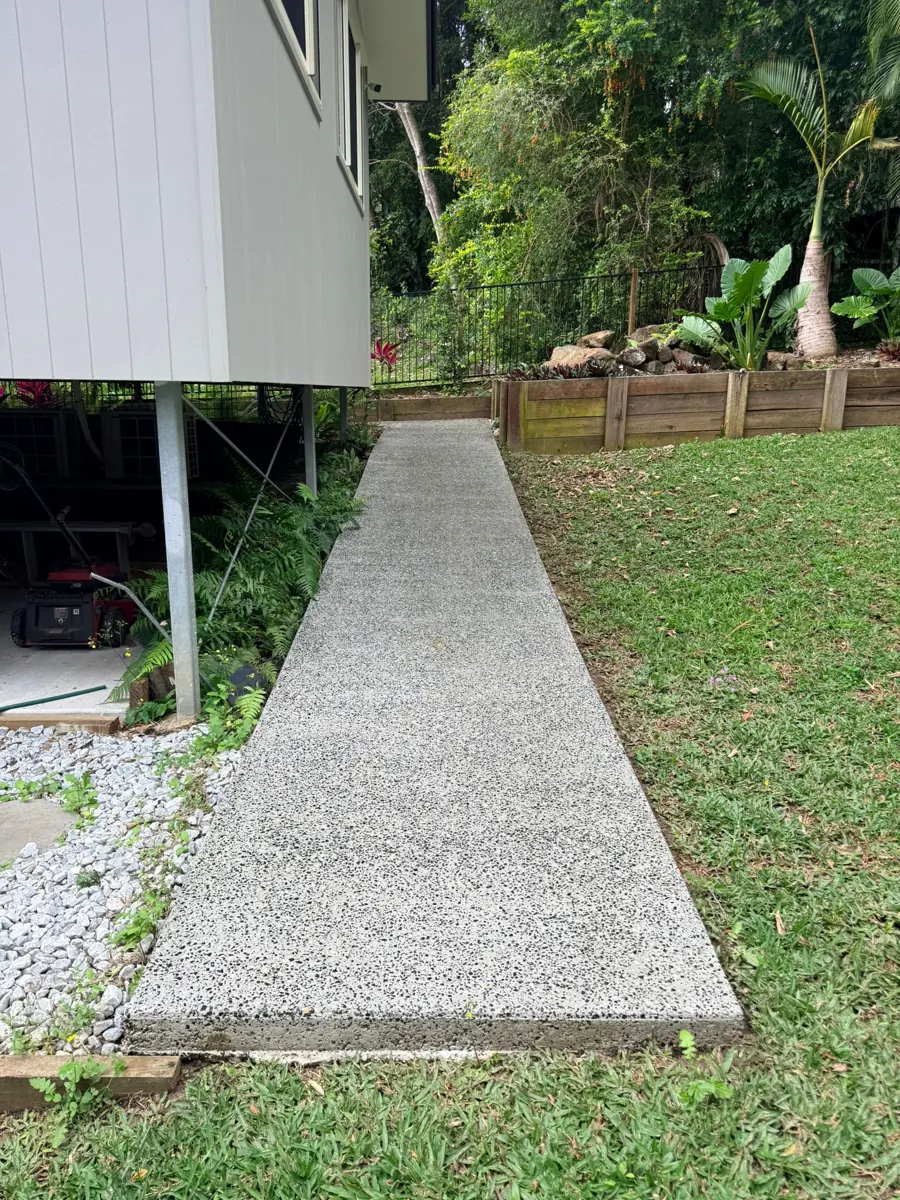
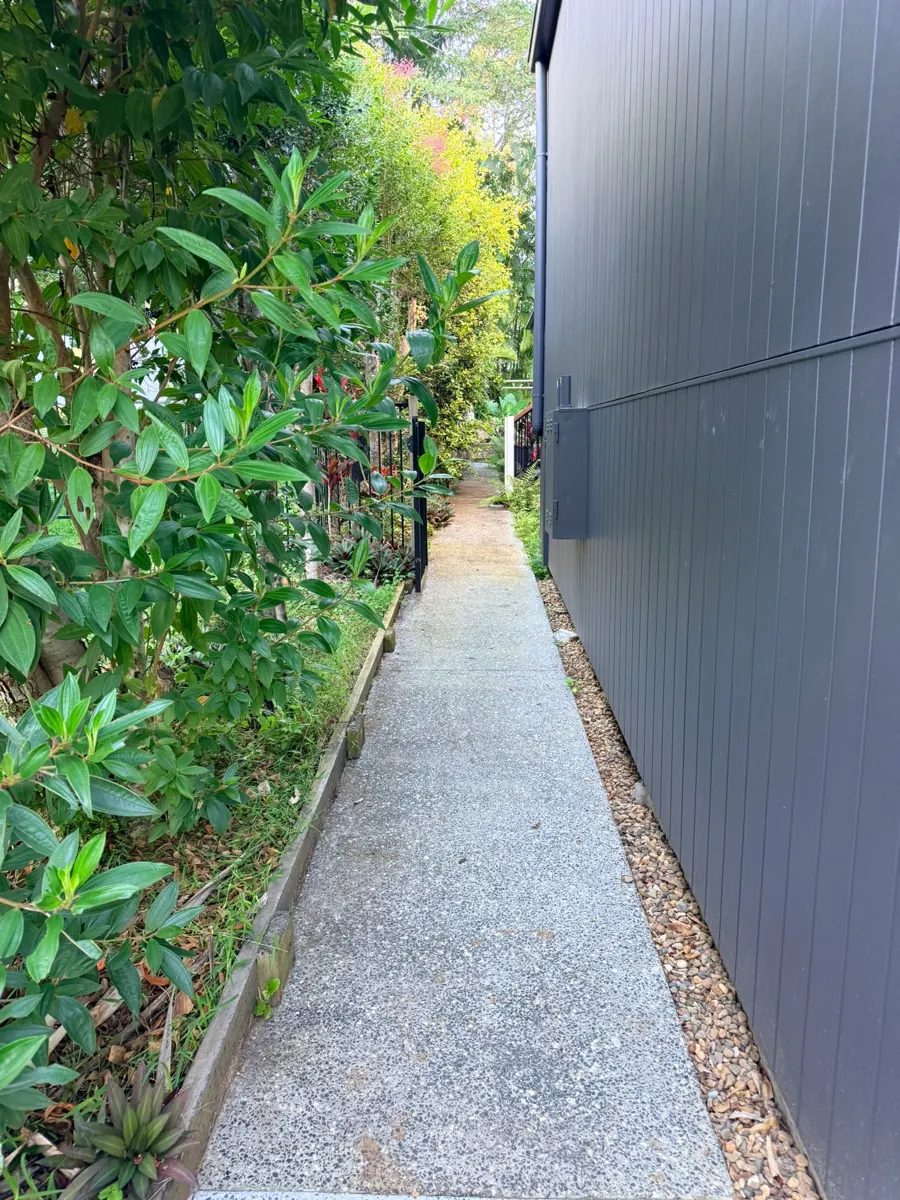
Clean. Dry. Seal. Cure.
Sealing, Cleaning & Where We Work
Sealing exposed aggregate is one part of our wider concrete sealing service, which also covers plain and coloured concrete, pool surrounds and steps.
The first step on any job is a proper clean. Read how we go about driveway cleaning.
We work across the Sunshine Coast, including Buderim and Forest Glen, where exposed aggregate driveways are common. See all service areas.
Exposed Aggregate Sealing FAQs
A clear or colour-enhancing sealer usually needs a fresh coat every 18 months to 2 years on the Sunshine Coast, depending on sun exposure and traffic. A driveway in full sun and daily use wears faster than a shaded path.
Yes. Sealer applied over dirt, algae or moisture won't bond properly. Every sealing job starts with a full clean and a proper dry, which is why we do both in the one booking.
A clear sealer protects without changing the look much. A colour-enhancing sealer deepens and enriches the colour of the stone, so the surface looks richer. Because it does change the look, we'll talk it through before we start.
In most cases, yes. We assess what's already there first. Old sealer that's failing or flaking needs to be dealt with before a new coat goes on, and we cover that at quote stage.
Light foot traffic is usually fine after 24 hours, and vehicles typically need several days depending on the sealer and the weather. We'll give you exact timing for your job before we leave.
It slows them down rather than stopping them. Sealed aggregate absorbs less water, so moss and algae have a harder time taking hold, and what does grow is easier to clean off.