Driveway Cleaning on the Sunshine Coast
Mould, algae, tyre marks and years of grime lifted from concrete and exposed aggregate driveways. Cleaned evenly with a rotary surface cleaner, not a hand-held wand, by the owner.
What's Built Up on Your Driveway
Most Sunshine Coast driveways get dirty for the same few reasons. Humidity and shade feed mould, algae and moss, which show up first along the edges, in the wheel tracks and anywhere water sits after rain. Fallen leaves break down and leave dark tannin stains. Then there's the everyday build-up: tyre marks, oil drips and road film.
Left alone, it isn't only cosmetic. Algae-covered concrete gets slippery when it's wet, and a driveway that holds moisture stays dirty faster after every clean.
Not everything comes out the same way. Mould, algae and moss normally lift in a single clean, and fresh oil and tyre marks respond well too. Old, set-in oil or rust stains can lighten rather than disappear completely.
We'll tell you what to expect when we quote, based on what's actually on your driveway, rather than promising a result we can't deliver.
Concrete, Exposed Aggregate, Coloured & Stamped
Driveways aren't all the same, and the way we clean them isn't either.
- Plain and broom-finish concrete. The most straightforward to clean, and it shows an even result quickly.
- Exposed aggregate. Grime sits in the gaps between the stones, so an even rotary clean reaches the texture better than a wand. See our exposed aggregate sealing page for what comes next.
- Coloured concrete. Pressure is set to what the surface can take, so the colour isn't stripped.
- Stamped and stencilled concrete. Often sealed, and sometimes with a sealer that's wearing out. If we see one that's failing, we'll flag it before we start.
Driveway Cleaning Results
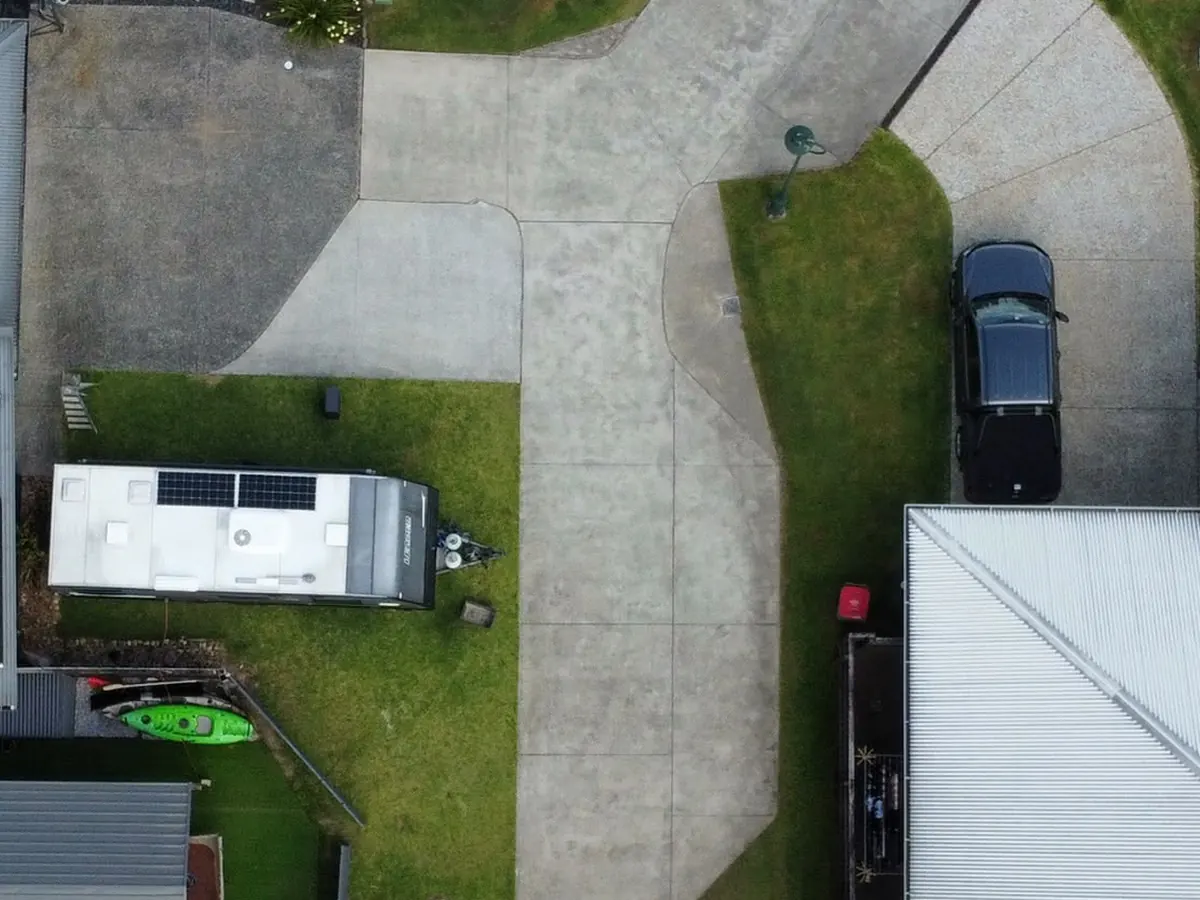
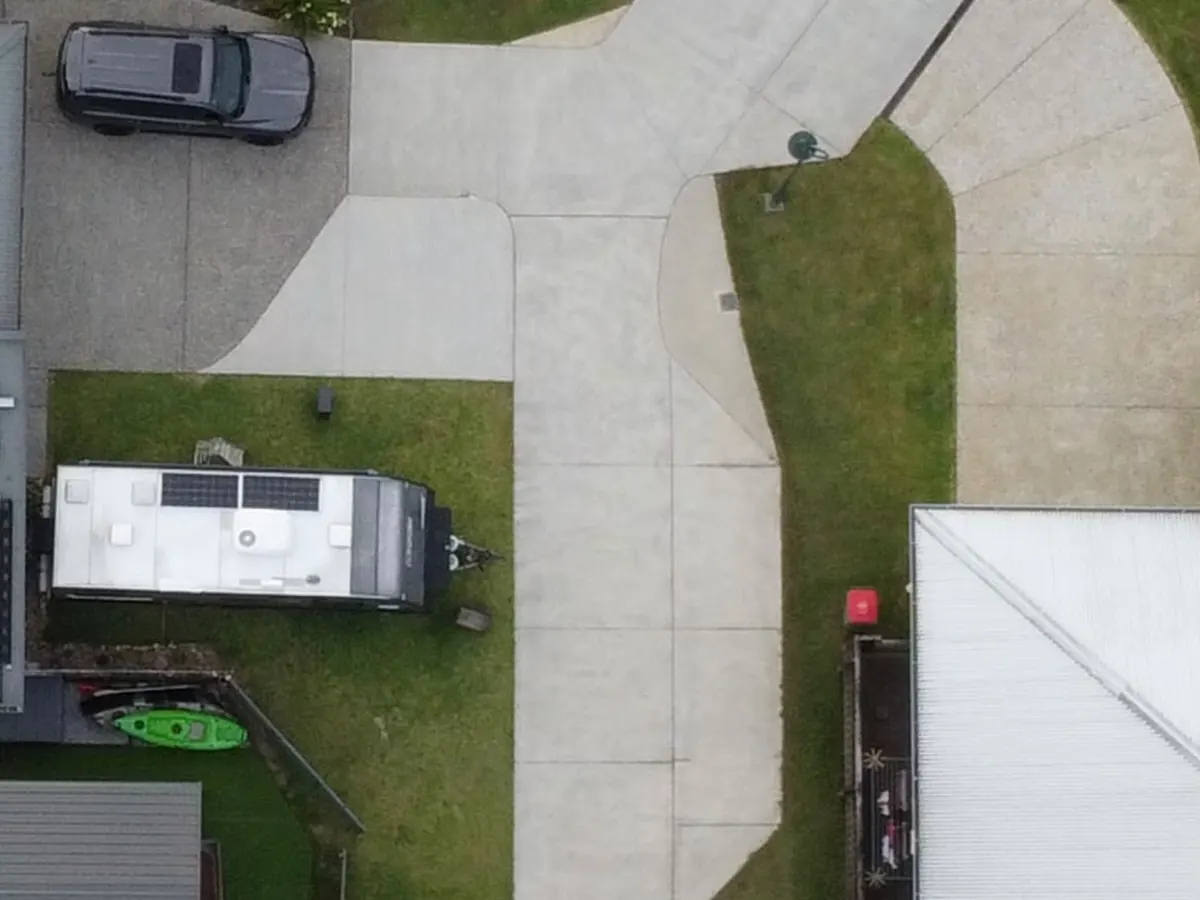
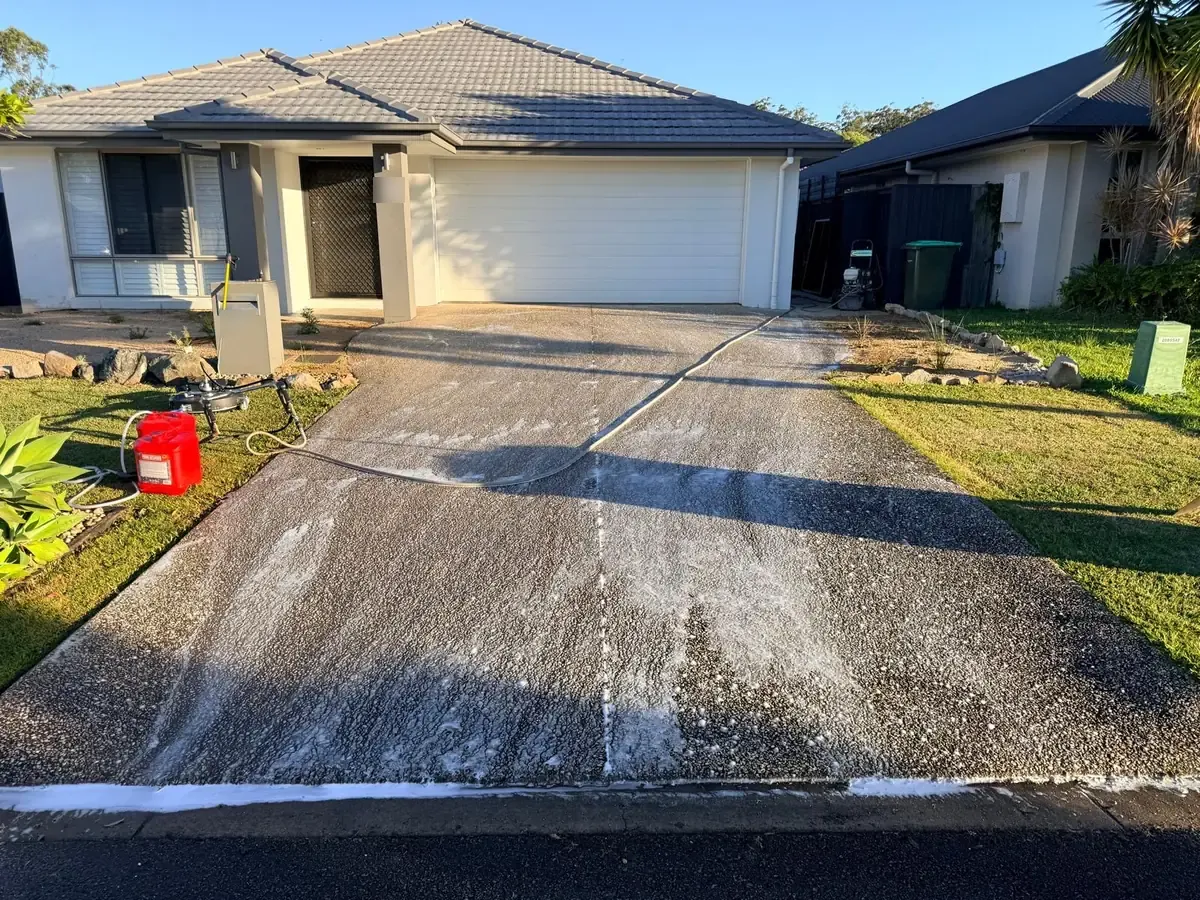
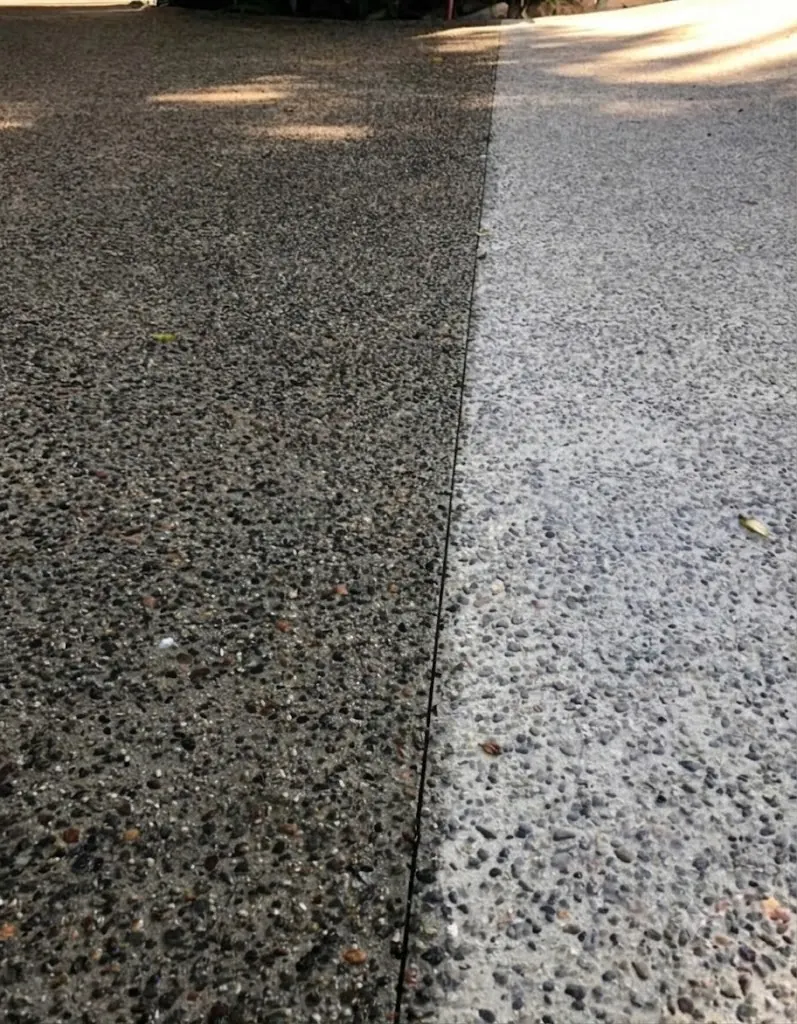
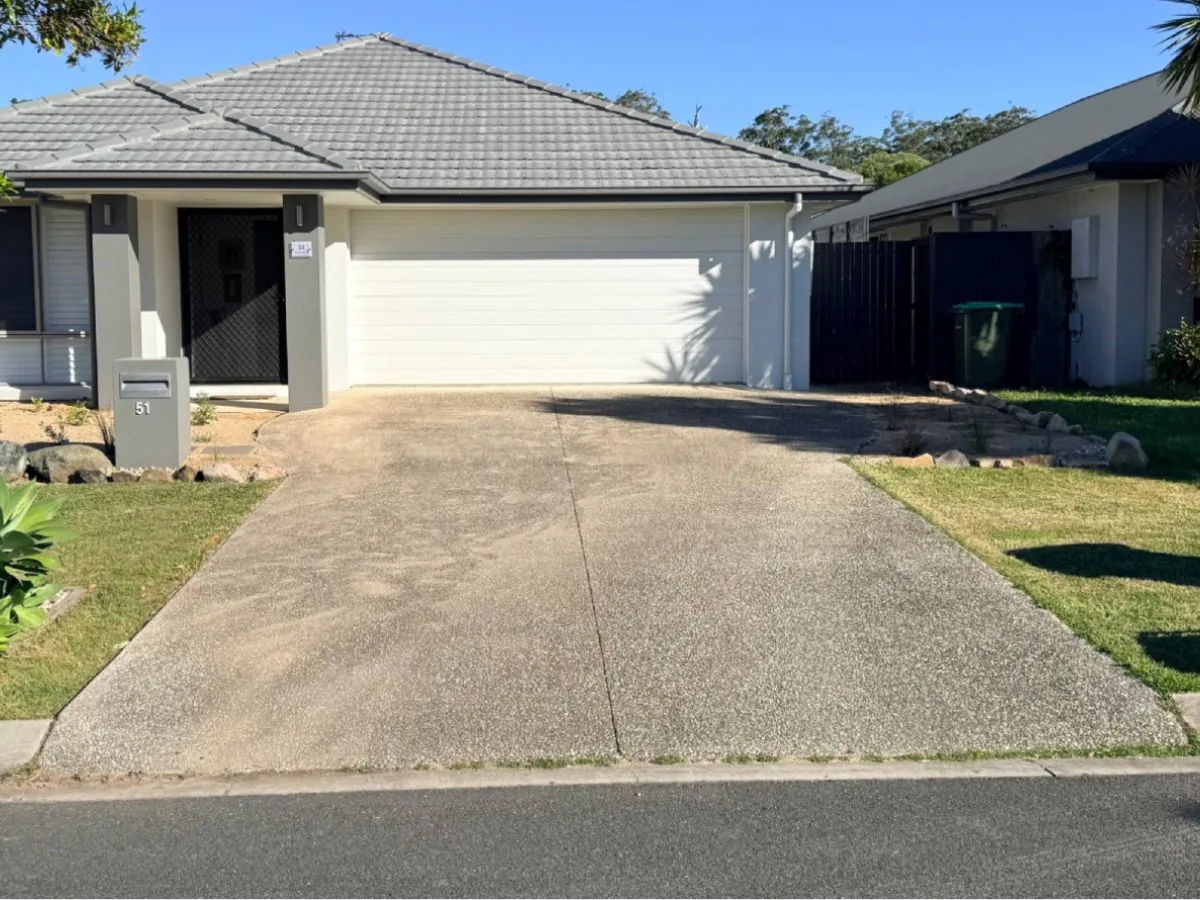
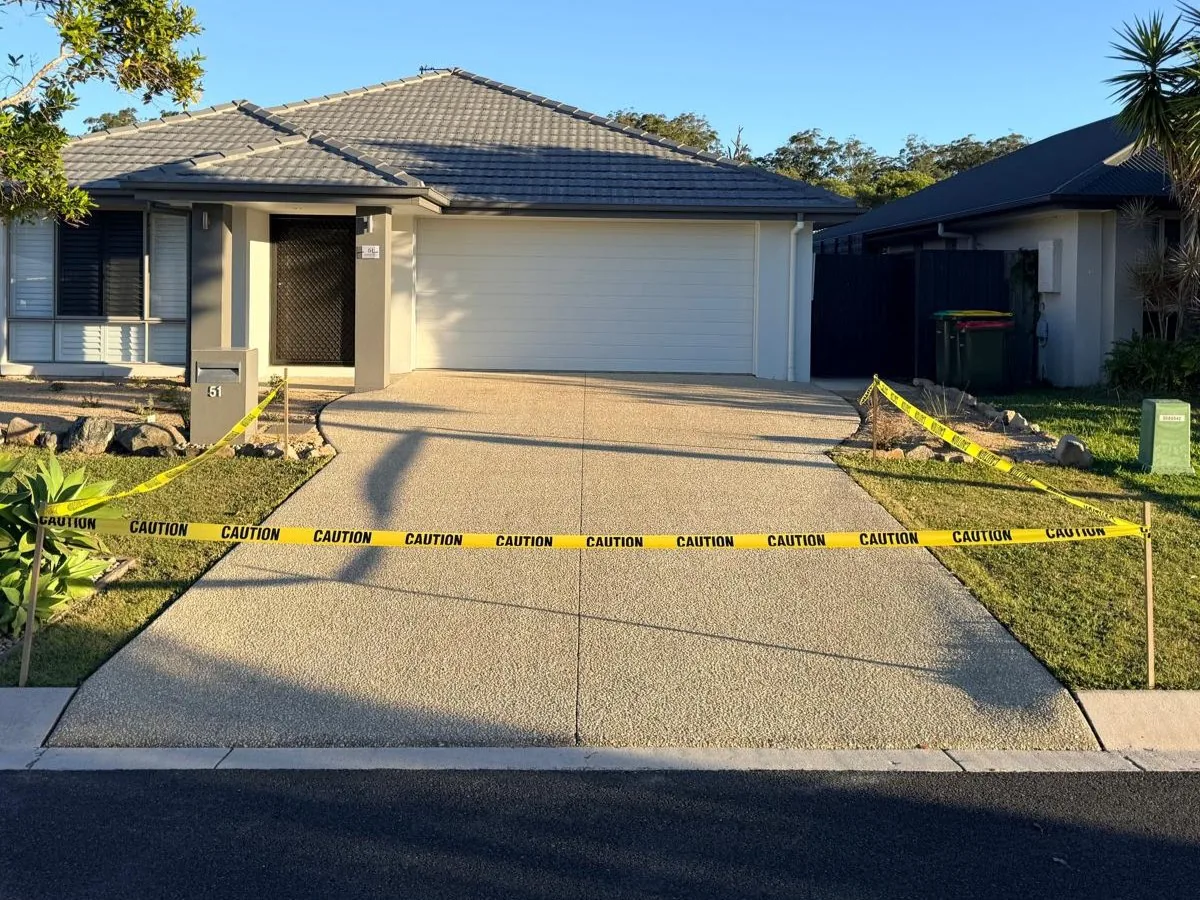
How a Driveway Clean Goes
Keeping It Clean
Most Sunshine Coast driveways need a clean every 12–18 months. Shaded or south-facing concrete that stays damp can need it sooner.
Cleaning removes what's on the surface. Sealing is what slows it coming back, because sealed concrete absorbs less water.
If you're thinking about sealing, cleaning is the first step anyway, and booking the clean and seal together means one quote and one job to arrange. Read more on concrete sealing and exposed aggregate sealing.
We also clean paths, pavers and pool surrounds and commercial surfaces. Full method detail is on our pressure washing page.
Driveway Cleaning FAQs
A standard driveway usually takes half a day to a full day to pressure clean. Larger areas, and long, steep or multi-level driveways, can take longer. We'll give you a timeframe for your job when we quote.
Usually not once the job is agreed. We need clear access to the driveway, so vehicles need to be moved, and we confirm water access when we quote. It's worth being around at the end for the walk-through, but it isn't essential.
Not when it's set up for the surface. A rotary surface cleaner spreads pressure evenly, and we match pressure to the concrete. Poorly bonded stones or an old, failing sealer can be affected by any pressure washing, so we check for that before we start and tell you if we see it.
Fresh oil and tyre marks usually respond well. Old, set-in oil can lighten rather than disappear completely, and we'd rather tell you that when we quote than promise a result we can't deliver.
It's worth considering if you want it to stay cleaner for longer. A sealed surface absorbs less water, which slows moss and algae and makes stains easier to remove. It isn't compulsory, and we'll happily clean without sealing if you'd prefer.
It depends on the area, the surface and how much has built up. We quote every job individually and for free, usually within 48 hours. Send a photo of the driveway and your suburb and we can often give you a good idea before we visit.